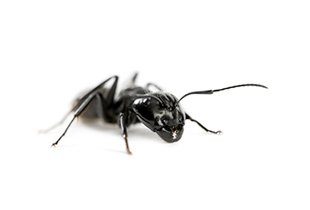
SPECIES: Camponotus (order Hymenoptera)
COMMON NAME: Carpenter Ant
SIZE: 7-14.5 mm (workers); up to 16 mm (queen)
LIFECYCLE: The lifecycle of an ant consists of four stages: egg-larva-pupa-adult. The eggs, small, white or yellowish, are laid in huge numbers by the queen (colonies may also contain millions of ants, all produced by a single queen) and, within 2-6 weeks develop into larvae. After being fed for a period ranging from a few weeks to several months, they become pupae. During the pupal stage, the ant remains idle: it feeds and undergoes the profound transformation into an adult insect.
FEATURES: Photophobic, dark brown in colour, and often black, these ants are easily distinguished from other ants by their size.
HABITAT: Inside buildings, they dig into the wood where they make their nests by creating tunnels where thousands of ants live and work. The colony within the building is often a satellite of a much more developed colony that exists outside of the structure.
DIET: Ants breed and protect colonies of aphids and collect their honeydew.
DAMAGE: ants can cause notable structural damage, especially in houses with a wooden structure. At the base of the holes in the wood, you can find a trail of fine sawdust.
I want to sterminate itFor the disinfestation of all areas, contact Gallura Disinfestazioni, a company specialized in disinfestation. Contact us for more information!
24
September
2026
Rat-proofing: making your home less accessible to rodents
18
September
2026
Cockroaches in the home: why they appear and how to prevent them
26
August
2026
The Most Active Insects During the Summer in Sardinia
Designed by

Powered by