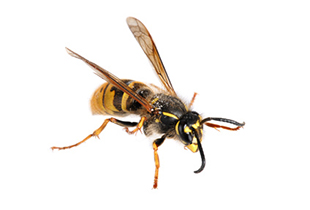
SPECIES: Vespula germanica ( order Hymenoptera )
COMMON NAME: European (or German) wasp
SIZE: adult, about 2 cm
LIFECYCLE: eggs hatch about 10-14 days after laying. After about 14 days, the young come out of their cells as small adults, already able to procure food.
FEATURES: a tough, formidable, and very aggressive wasp, it builds its nest in the ground, so they are not generally visible, and forming numerous colonies. The colonies sometimes have multiple queens. Characterised by considerable aggression that differs from all other wasps, which react only if disturbed. The European wasp may sting even if it is only carelessly disturbed. It is particularly dangerous, given the very high number of individuals per colony. More marked yellow colouring, with black spots separate from the black bands. At the heart of the black bands is an arrow-shaped patch with the base attached to the black band.
HABITAT: usually nests underground.
DIET: strictly carnivorous, it also feeds on fish waste, decomposing organic material, insects etc.
DAMAGE: aggressive and dangerous due to the large number of wasps in each colony. As in the case of wasps and bees, its sting has only localised, transient effects on most people, but allergic people may suffer anaphylactic reactions that are almost always deadly.
I want to sterminate itFor the disinfestation of all areas, contact Gallura Disinfestazioni, a company specialized in disinfestation. Contact us for more information!
18
September
2026
Cockroaches in the home: why they appear and how to prevent them
26
August
2026
The Most Active Insects During the Summer in Sardinia
14
August
2026
Wasps and Hornets: Differences and How to Recognize Them
Designed by

Powered by